NEWS

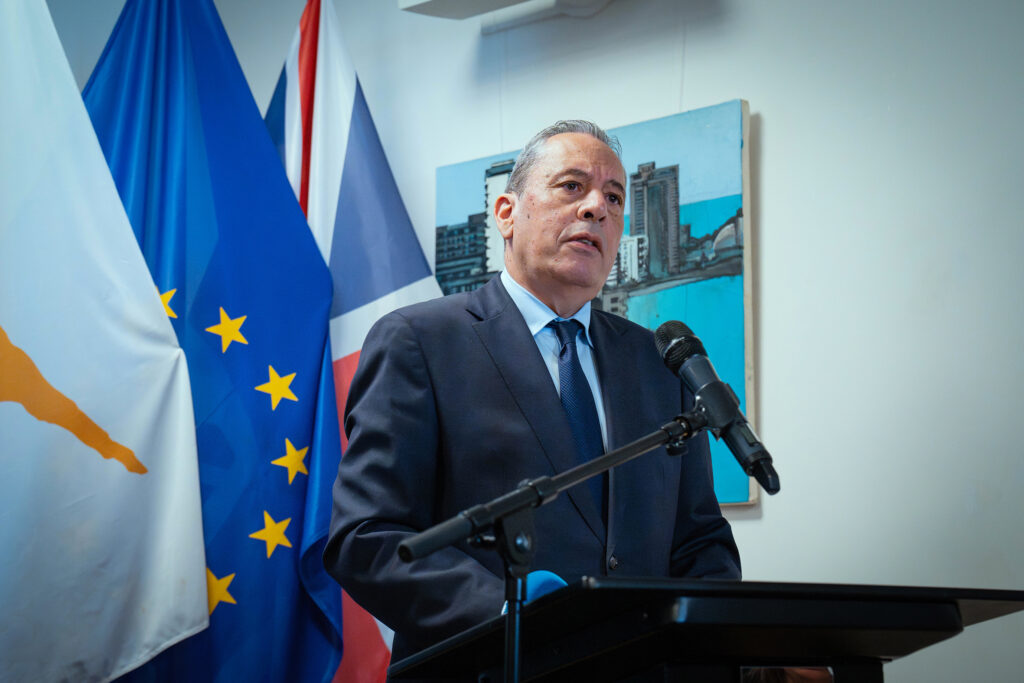
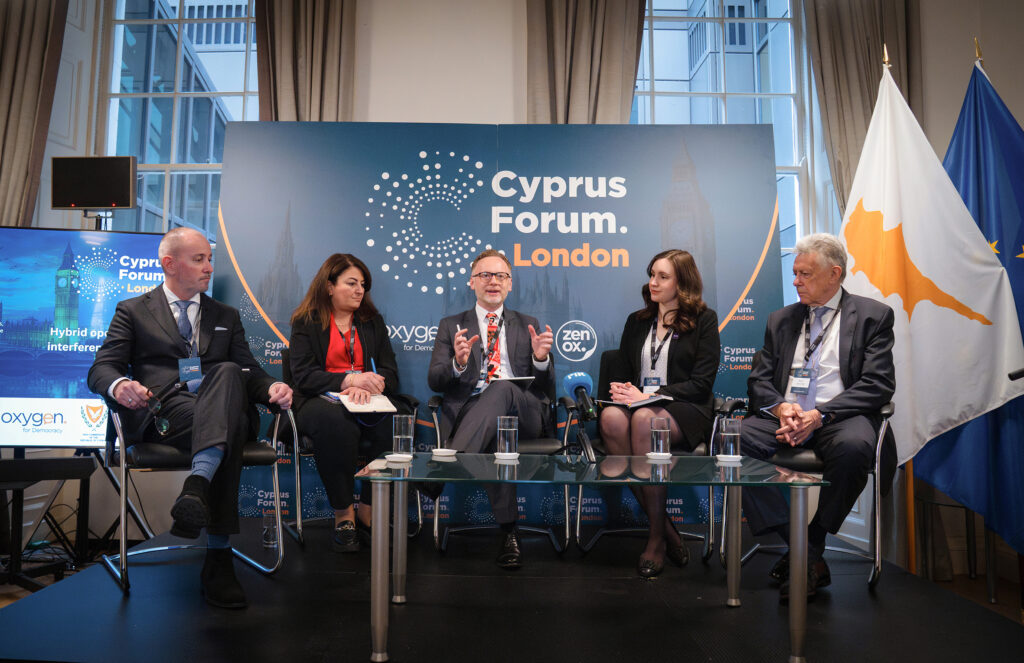
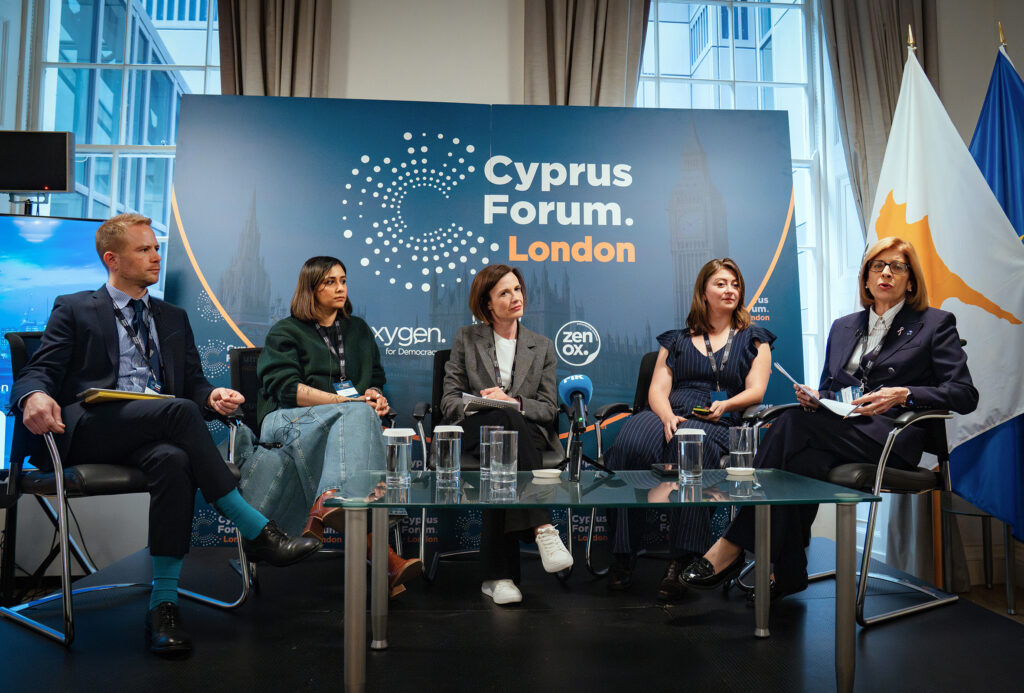
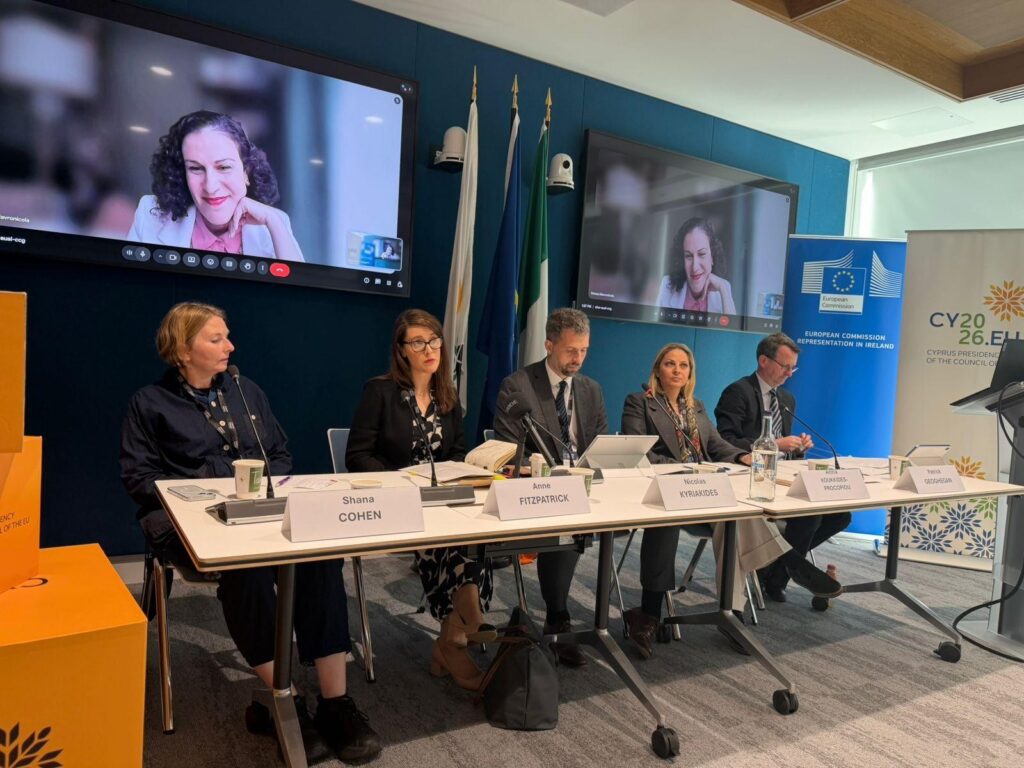
Cyprus Forum London 2026: Hybrid threats, disinformation, and democracy

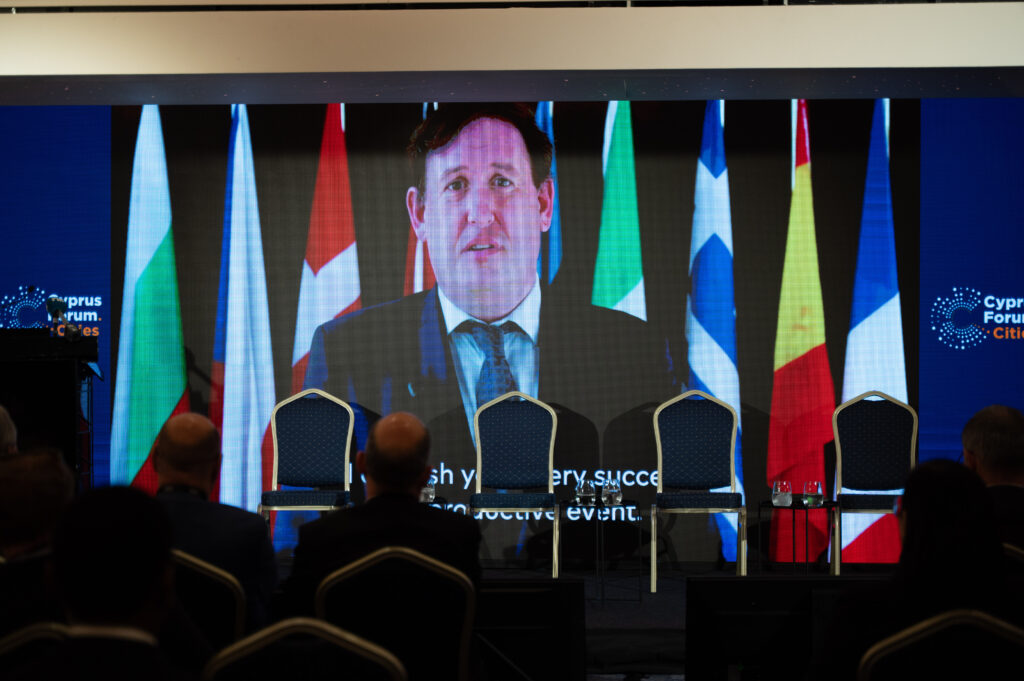
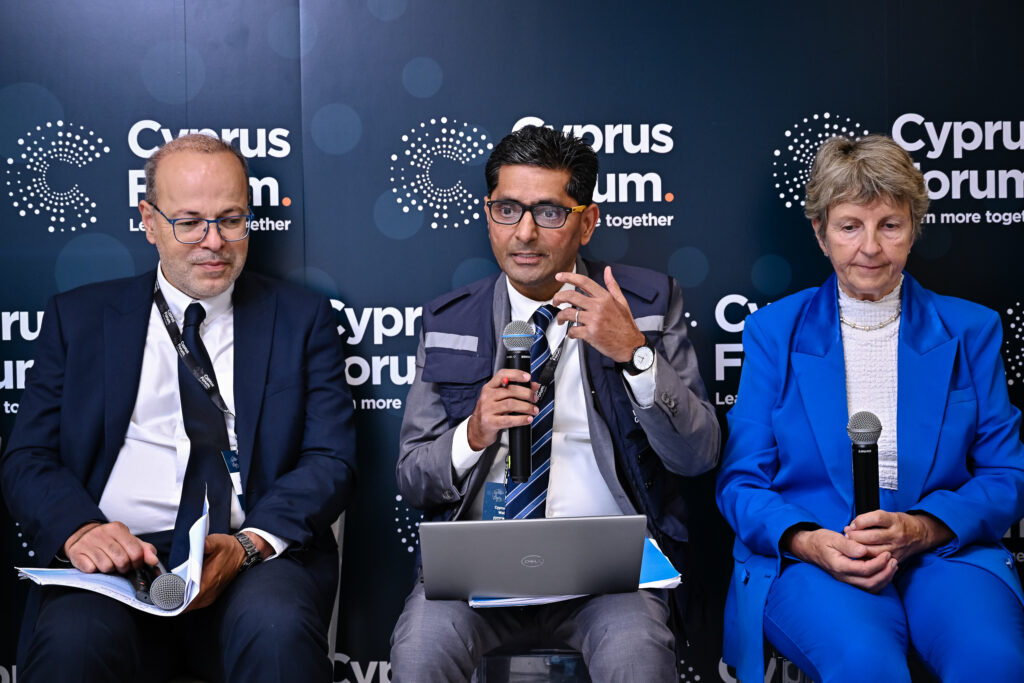
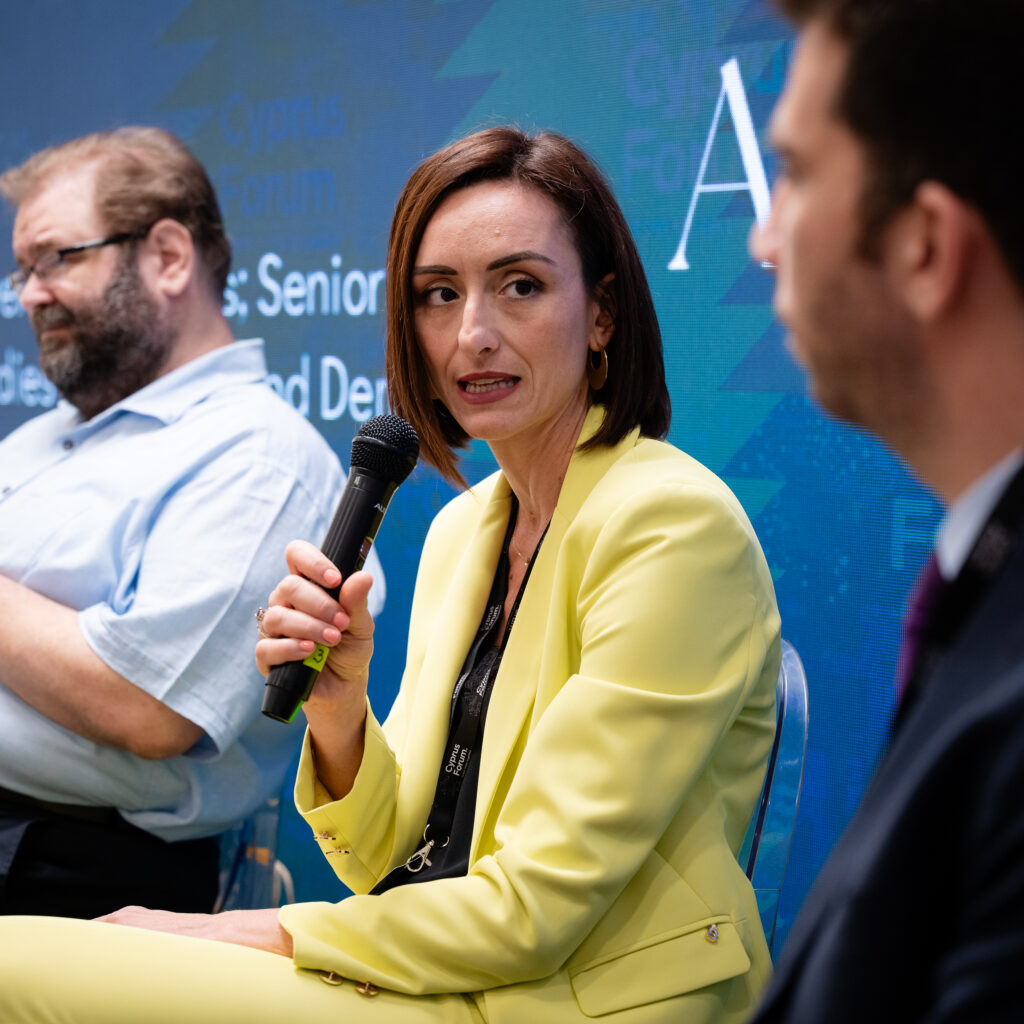
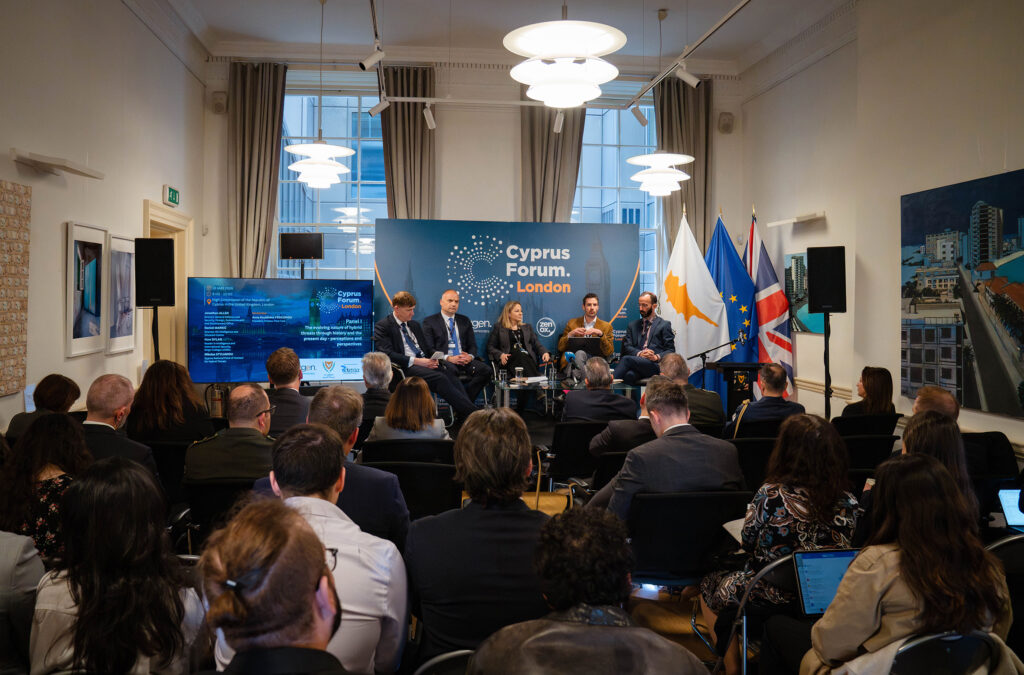
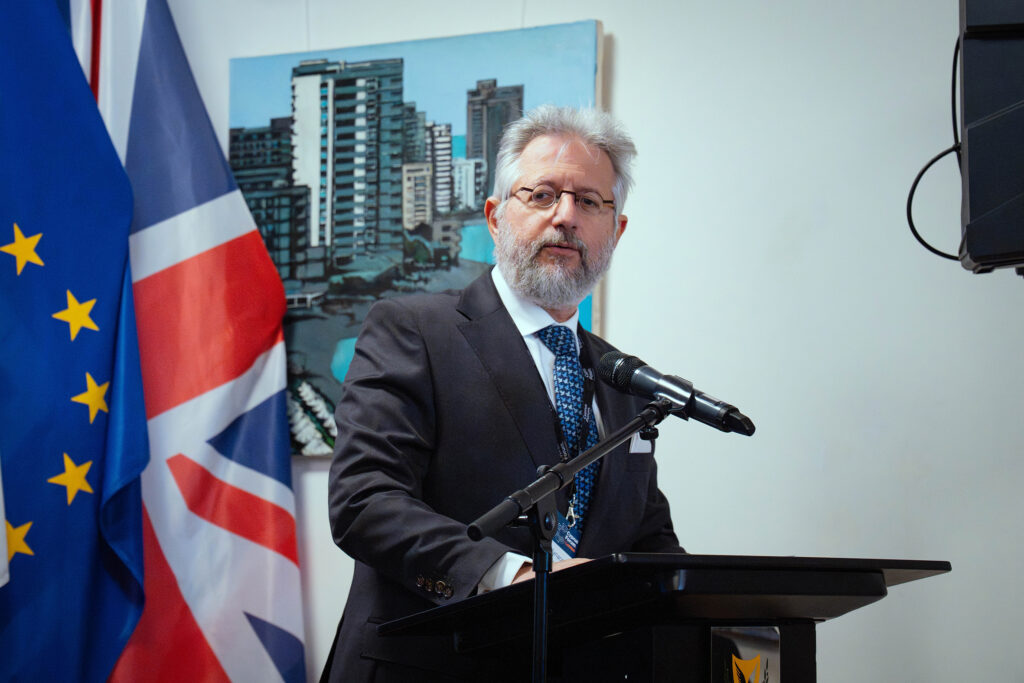
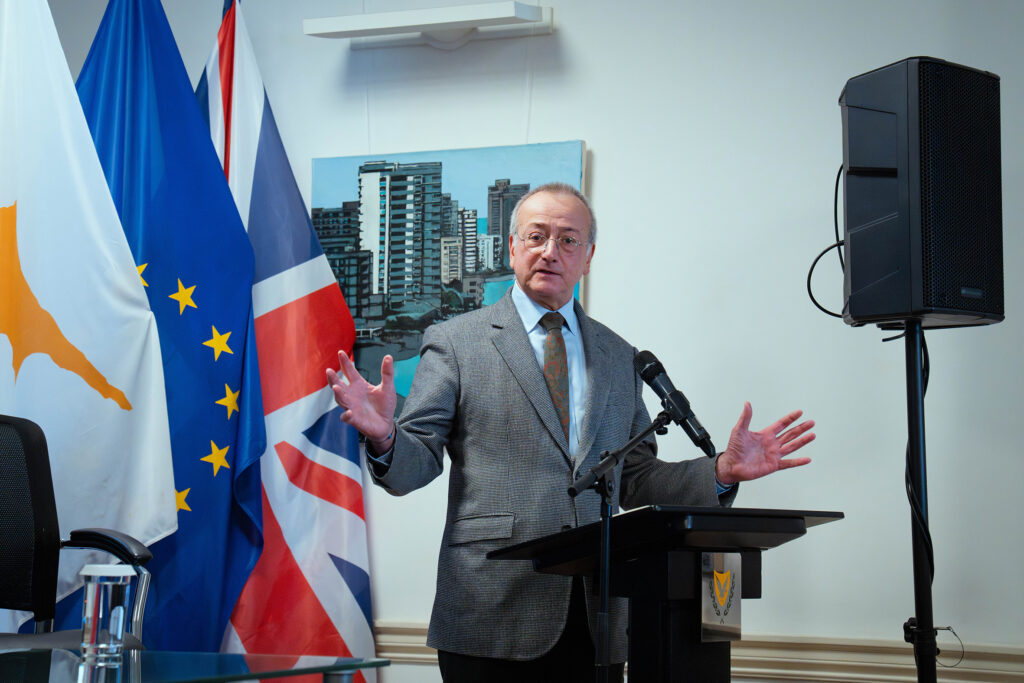
Cyprus Forum London 2026, organised by the High Commission of the Republic of Cyprus in the UK and Oxygen for Democracy with the support of the Delegation of the European Union to the United Kingdom, and the Centre for Socio-Political Studies and Think Tank Politeia, brought together ministers, senior intelligence officials, diplomats, academics, and civil society leaders in London for a high-level dialogue on hybrid threats and democratic resilience during Cyprus’ Presidency of the Council of the European Union. Drawing on Cyprus’ unique geopolitical position and longstanding exposure to both conventional and asymmetric threats, discussions focused on the evolving nature of hybrid warfare, the erosion of trust in democratic institutions, and the growing importance of coordinated European responses to disinformation, cyber threats, illicit finance, and foreign interference.

Contributions from Cypriot, EU, and UK officials highlighted Cyprus’ role as a bridge between Europe and the Eastern Mediterranean, as well as its active contribution to EU hybrid threat frameworks and regional security cooperation. Particular emphasis was placed on the strengthening bilateral relationship between Cyprus and the United Kingdom, with speakers underlining the growing strategic alignment between the two countries on security, defence, and regional stability. Discussions pointed to expanding EU-UK cooperation, reinforced political dialogue, and Cyprus’ role as a trusted partner in addressing shared challenges affecting Europe and the wider region.

With panels examining the evolution of hybrid warfare, the financing and organisation of hybrid operations, and the societal impact of disinformation, the forum offered a timely platform for advancing dialogue on Europe’s collective security and resilience. The discussions reinforced Cyprus’ ambition during its EU Council Presidency to foster clearer strategic coordination among allies, deepen Cyprus-UK relations, and position the island as a convening hub for international policy dialogue at a moment of growing geopolitical uncertainty.
Cyprus Forum London 2026: Hybrid threats, disinformation, and democracy Read More »
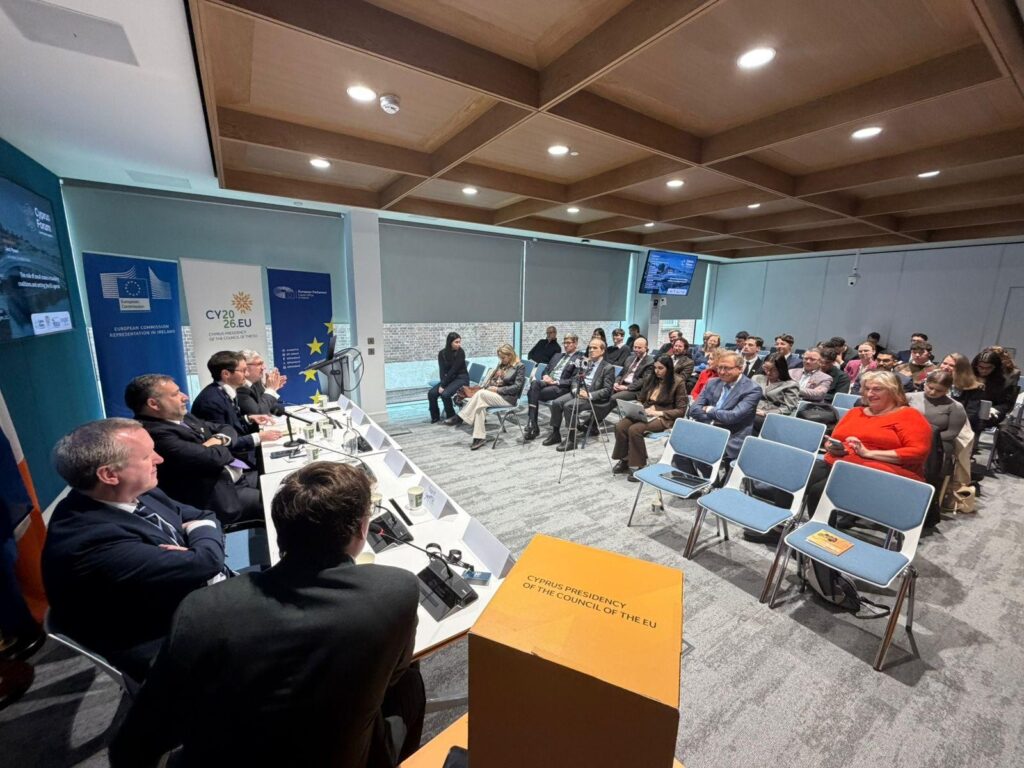
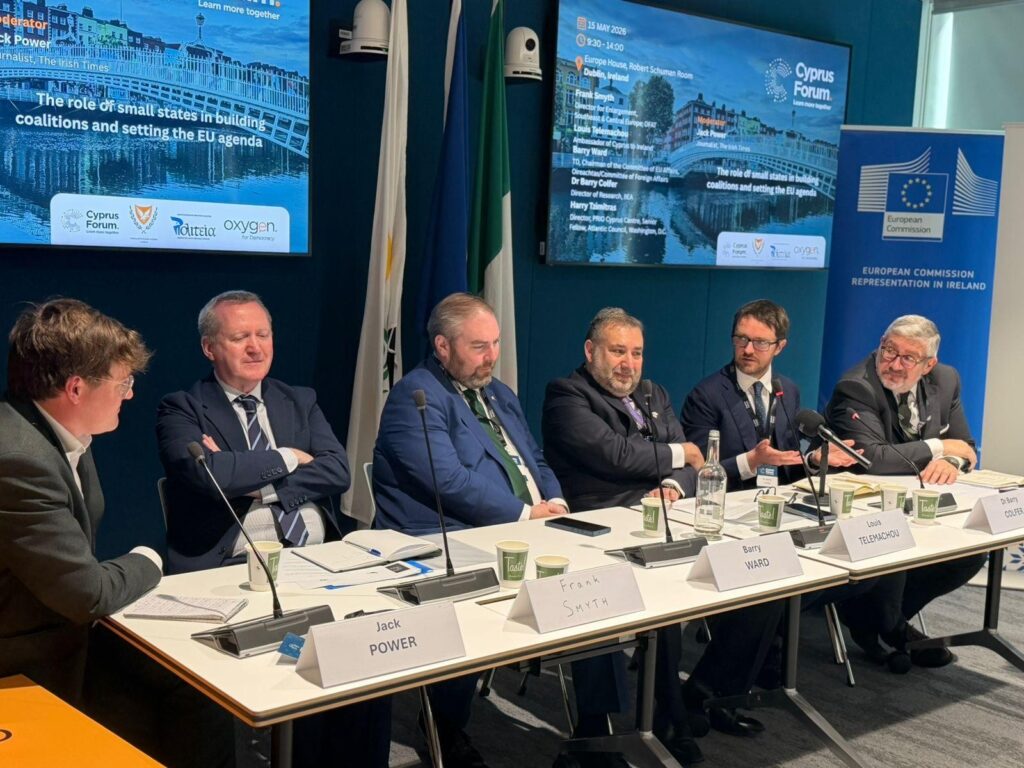
Cyprus Forum Dublin: Focus on Strengthening Bilateral Relations Between Cyprus and Ireland

Cyprus Forum Dublin brought together policymakers, academics, diplomats, journalists, and representatives of civil society in Ireland’s capital for a day of substantive dialogue on the future of Europe and the role of democratic cooperation in an evolving geopolitical landscape. Organised as part of the broader Cyprus Forum initiative, the event created an important platform for the exchange of ideas on European governance, democratic resilience, the rule of law, and the contribution of small states in shaping the European agenda.

Discussions highlighted the importance of strengthening dialogue between Cyprus, Ireland, and European partners at a time of growing political and societal challenges across the continent. Participants explored how smaller EU member states can play an active role in advancing European unity, democratic values, and constructive policymaking, while also reinforcing cooperation between academia, civil society, and public institutions.

With contributions from leading experts, policymakers, and public figures, Cyprus Forum Dublin underscored the value of inclusive and forward-looking policy dialogue in addressing Europe’s future challenges. The event also marked an important step in expanding the Cyprus Forum’s international presence and fostering new partnerships and collaborations across Europe.

Cyprus Forum Dublin was supported by the Embassy of the Republic of Cyprus in Ireland and the Centre for Socio-Political Studies and Think Tank Politeia.

Cyprus Forum Dublin: Focus on Strengthening Bilateral Relations Between Cyprus and Ireland Read More »

Cyprus Forum Cities 2026 focused on the future of local governance and sustainable cities

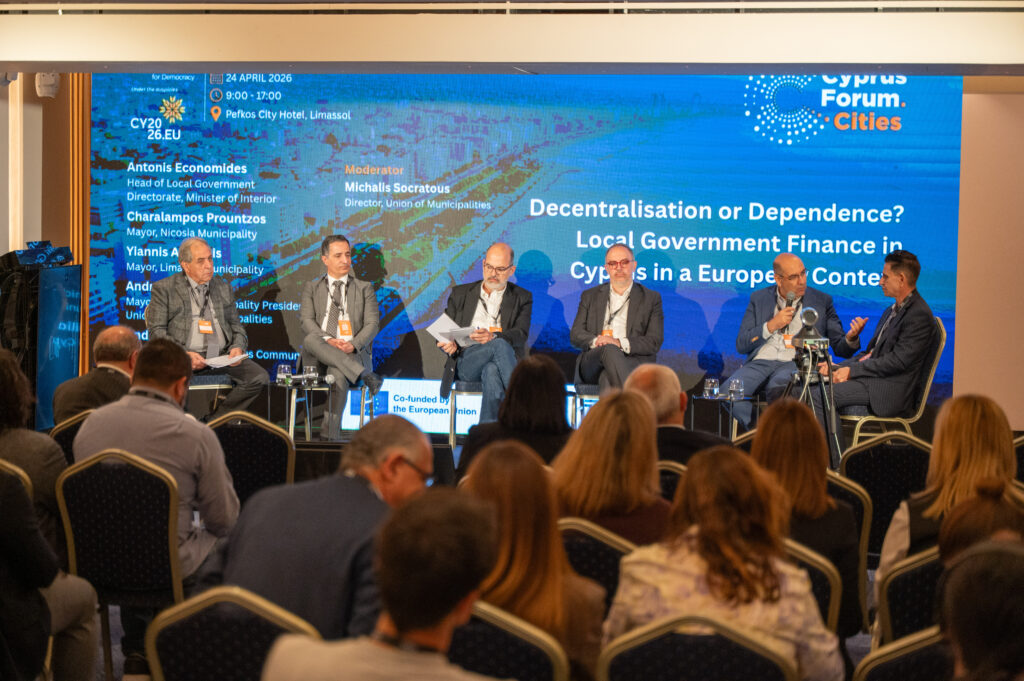
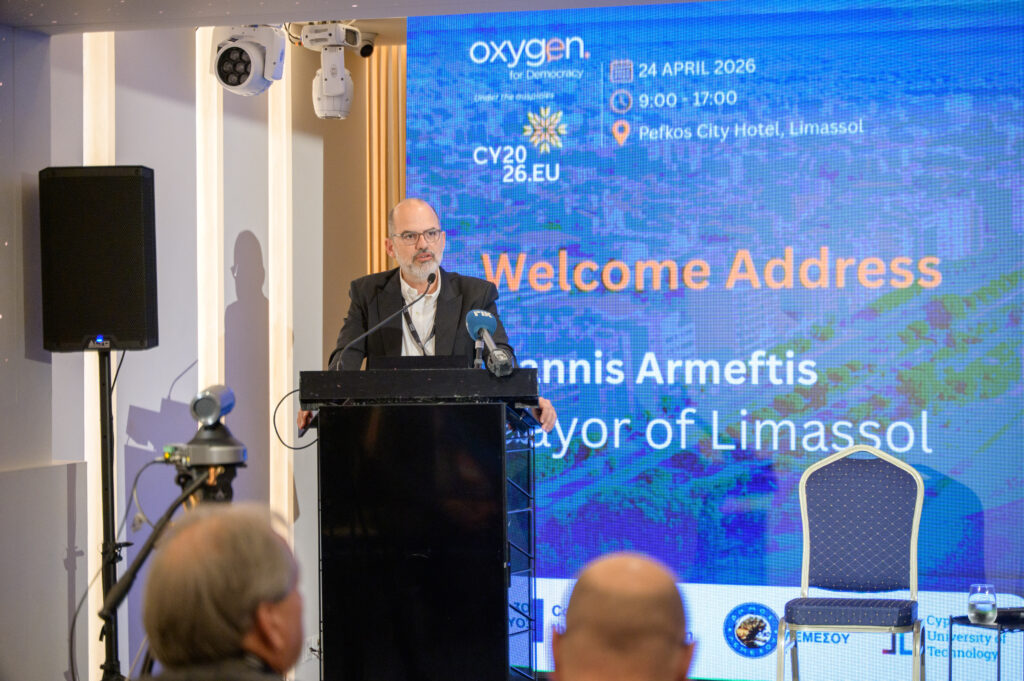
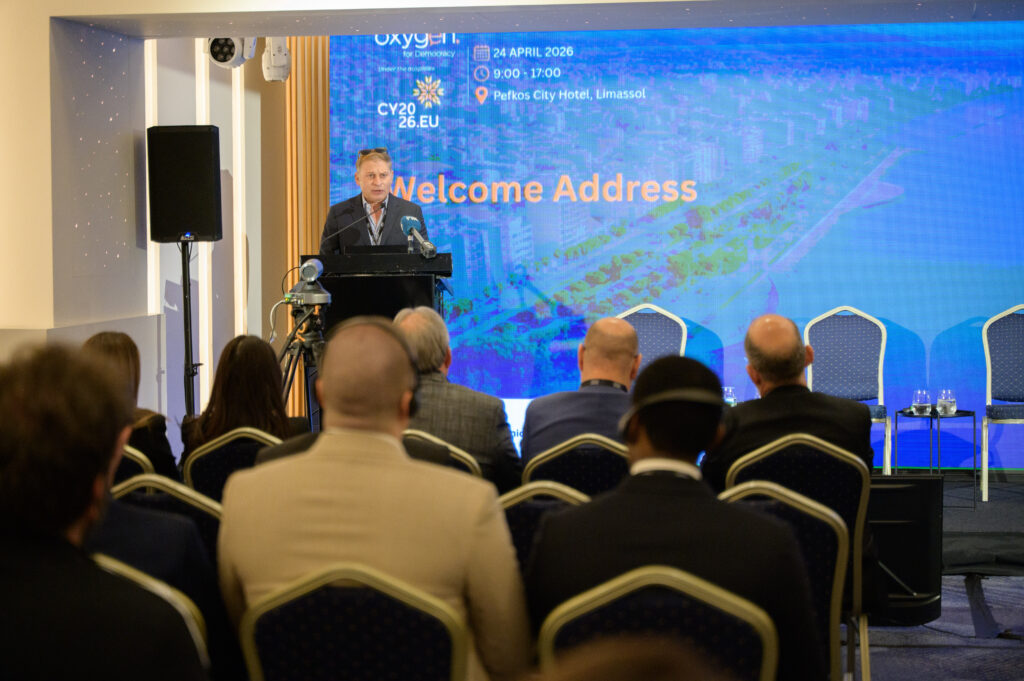
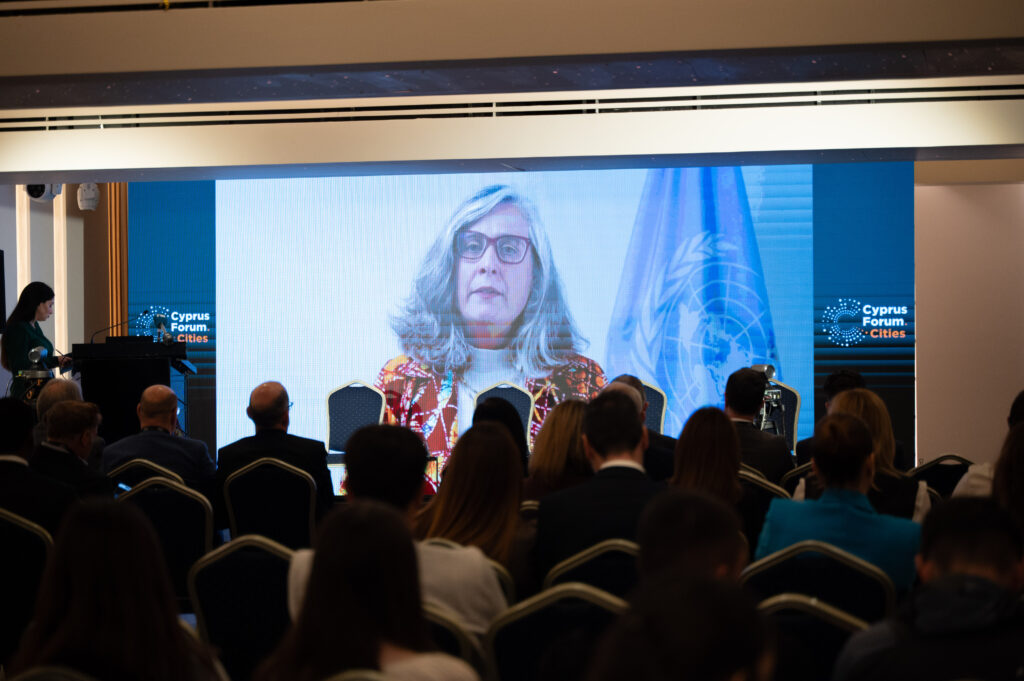
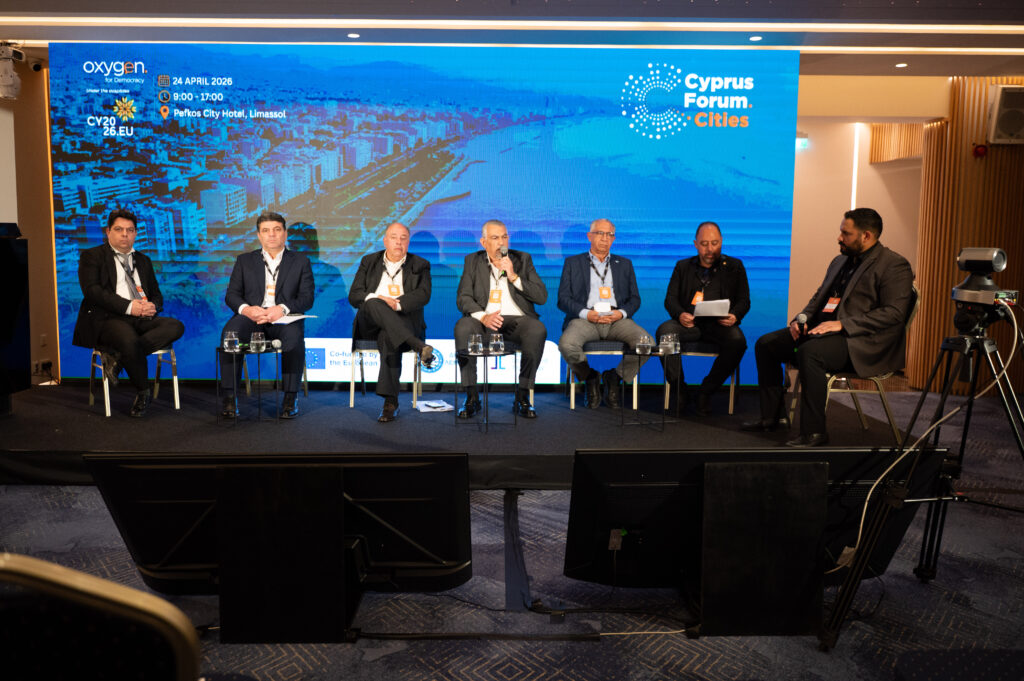
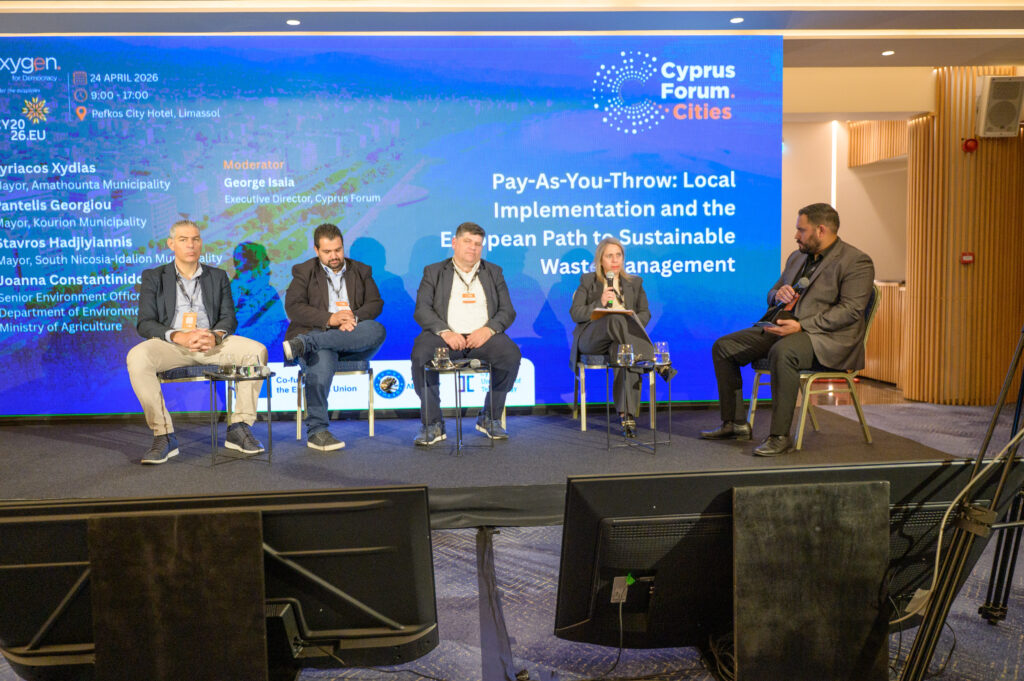
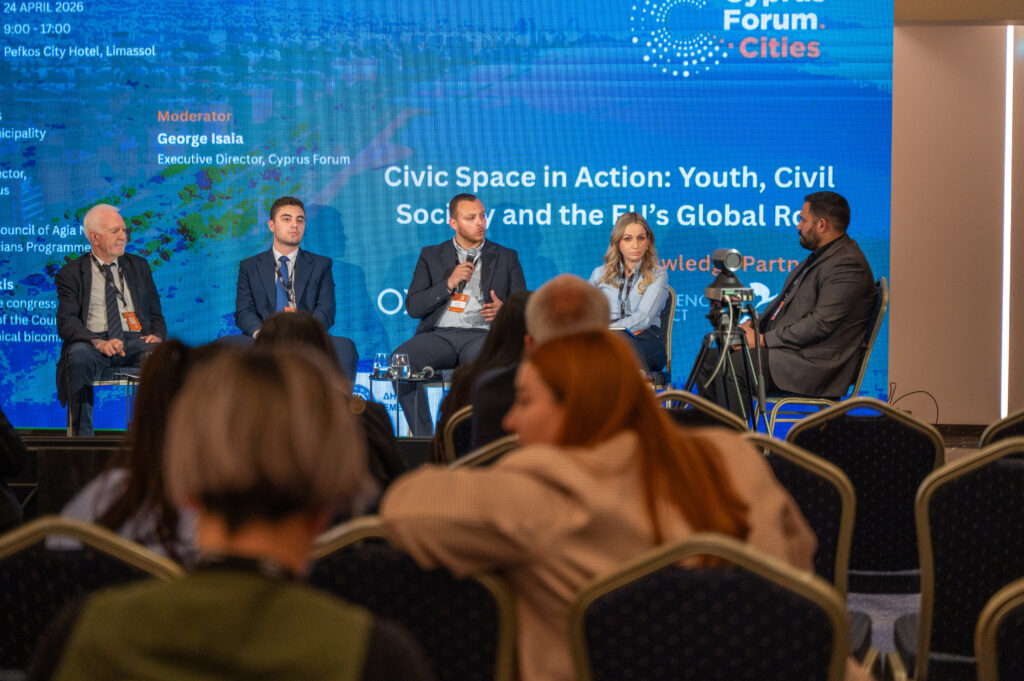
The Cyprus Forum Cities 2026, held on 24 April 2026 in Limassol at Pefkos City Hotel, concluded successfully, bringing together representatives of local government, institutions, academia, technocrats, and civil society from Cyprus and abroad.

Co-organised by Oxygen for Democracy, the Municipality of Limassol, and Cyprus University of Technology, under the auspices of the Cyprus Presidency of the Council of the European Union 2026 and co-funded by the European Union, the Forum reaffirmed its role as Cyprus’s leading platform for dialogue on local government.

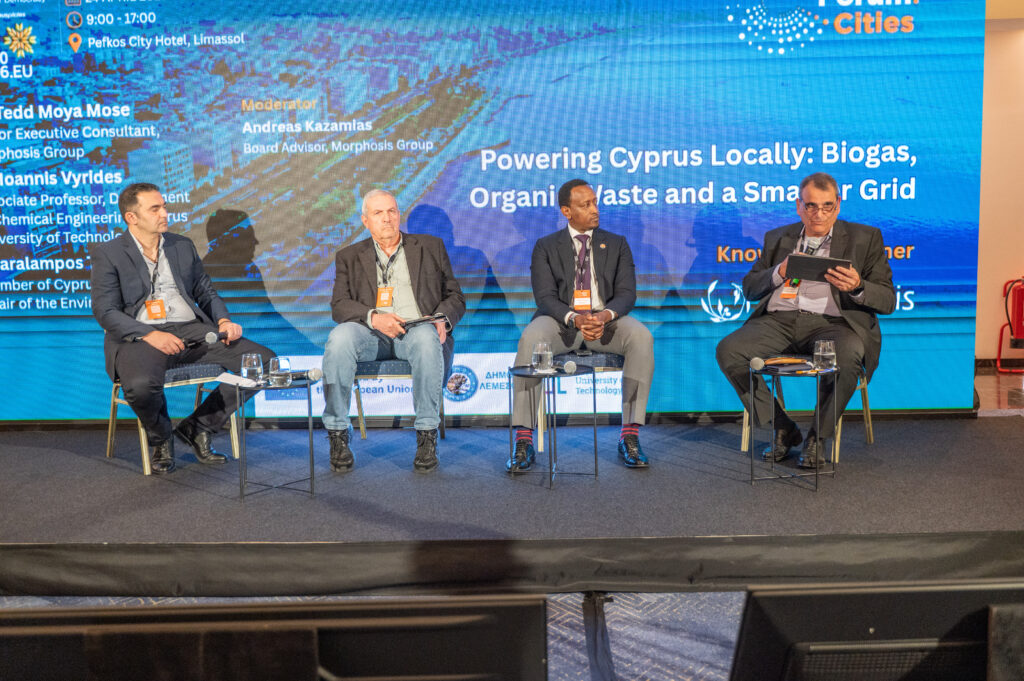
Discussions focused on key issues affecting the future of Cypriot cities, including local government reform, financial autonomy, citizen trust, sustainable mobility, housing, and modern waste management.

Among those participating were Yiannis Armeftis, Charalambos Pruntzos, Andreas Vyras, Christodoulos Partou, Christos Zannettou, and Kyriakos Xydias.

International perspectives were also highlighted, including remarks by Anacláudia Rossbach, who stressed the importance of affordable housing, urban regeneration, and cities as pillars of social cohesion.

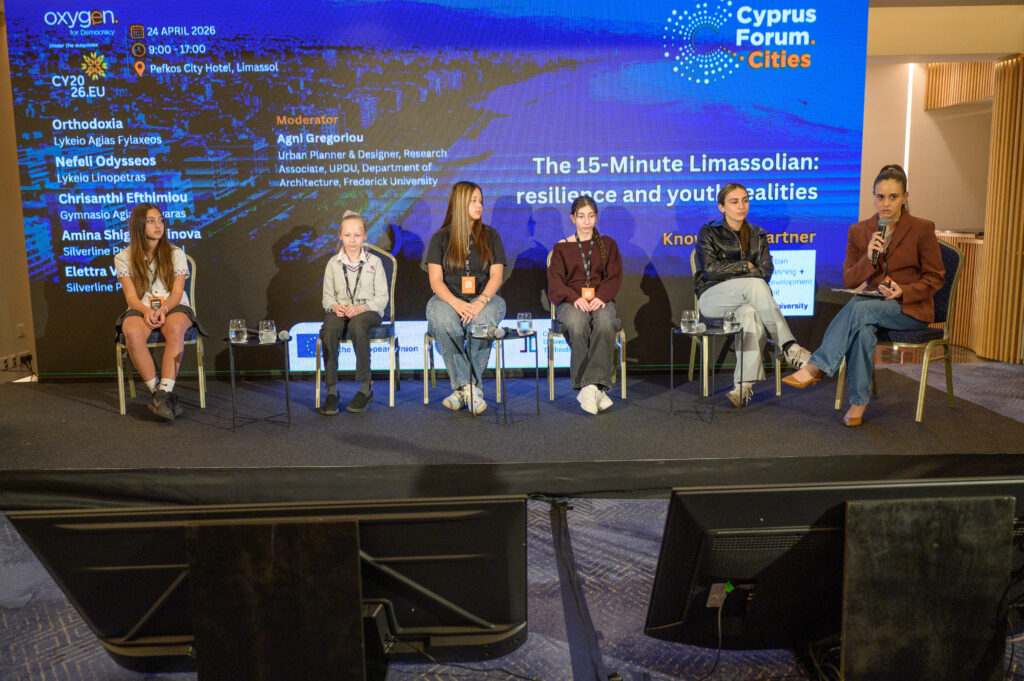
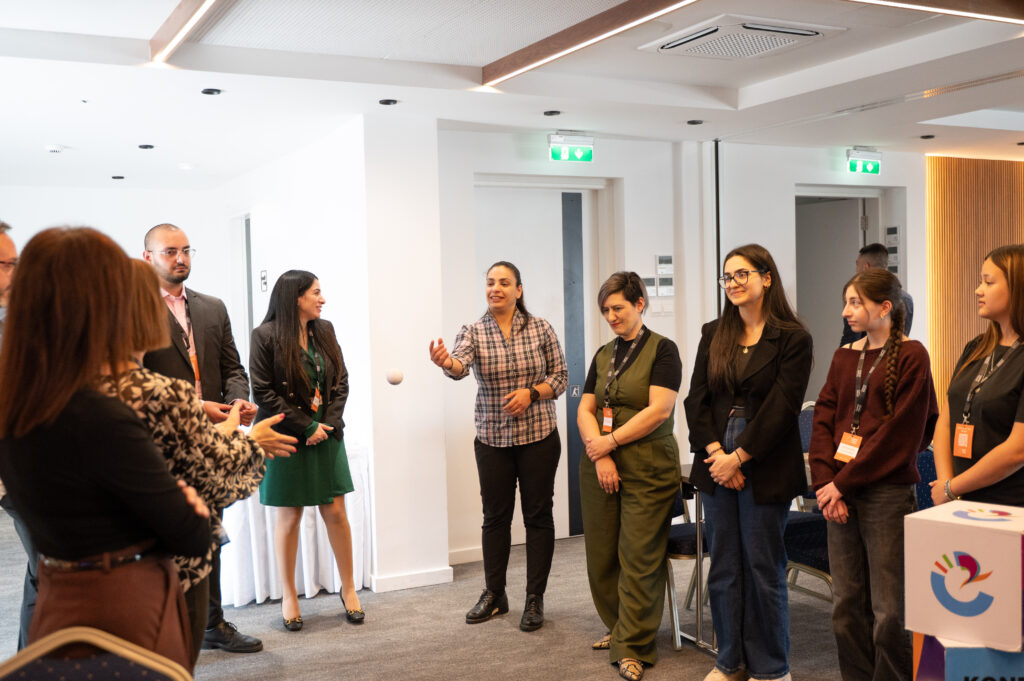
The forum also featured youth participation, with young people presenting proposals for more humane, functional, and sustainable cities.

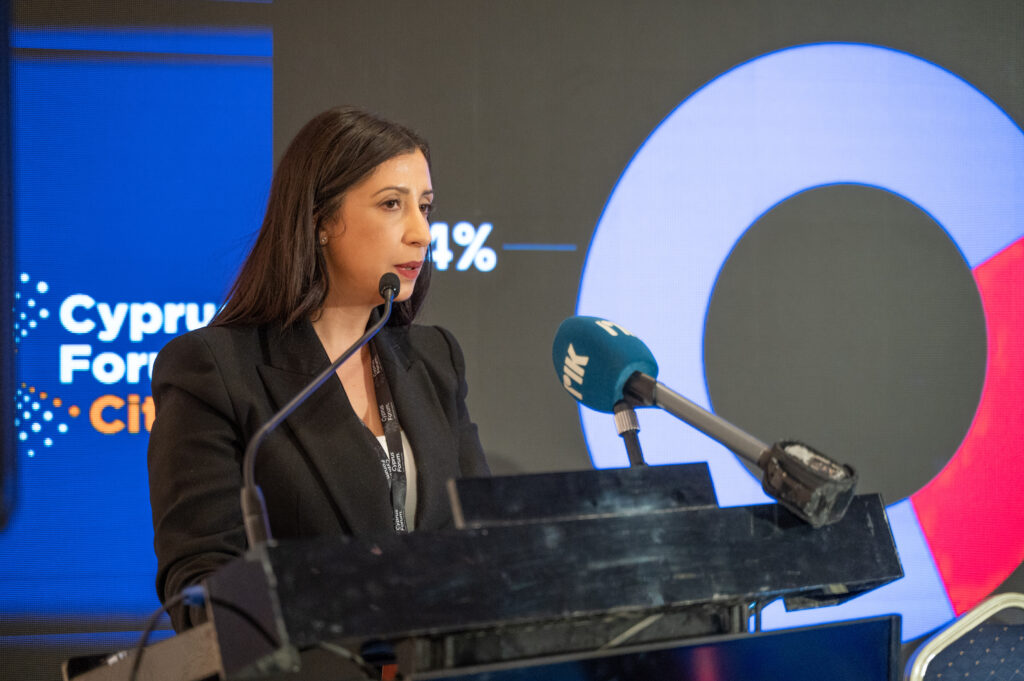
A public opinion survey presented during the event showed improved perceptions of local government, with 74% of citizens expressing a positive view of their municipality, while transparency and citizen participation remain key challenges.

The Cyprus Forum Cities 2026 reaffirmed Cyprus’s growing role in the European dialogue on cities and laid the groundwork for future partnerships and policy initiatives.

Co-organised by Oxygen for Democracy, the Municipality of Limassol, and Cyprus University of Technology, under the auspices of the Cyprus Presidency of the Council of the European Union 2026 and co-funded by the European Union, the Forum reaffirmed its role as Cyprus’s leading platform for dialogue on local government.

Discussions focused on key issues affecting the future of Cypriot cities, including local government reform, financial autonomy, citizen trust, sustainable mobility, housing, and modern waste management.

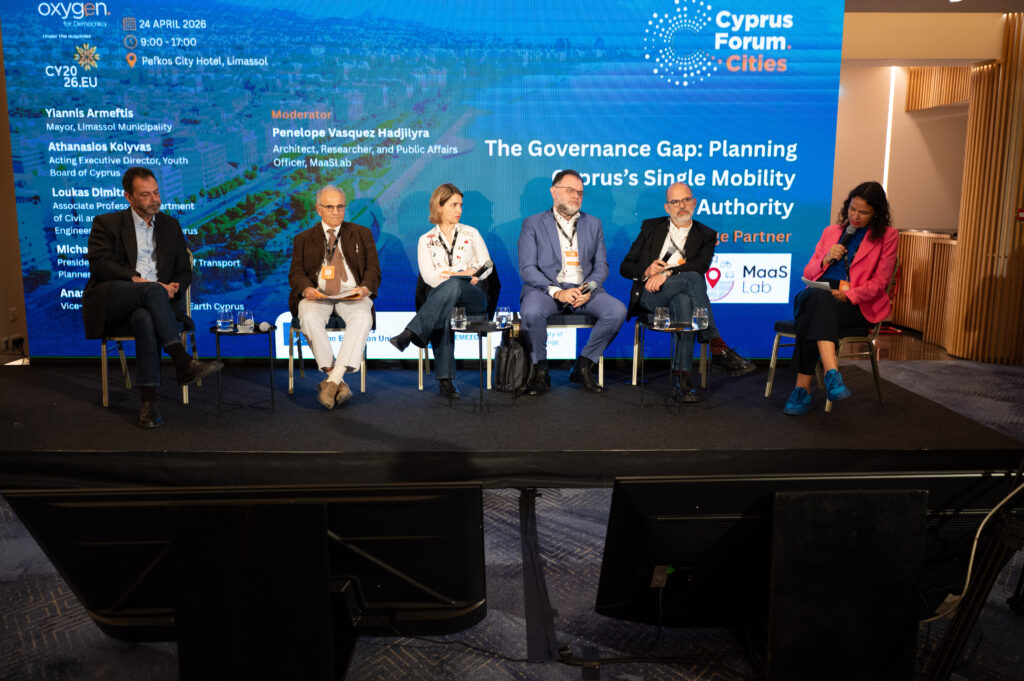
The forum also featured a high-level discussion titled “The Governance Gap: Planning Cyprus’s Single Mobility Authority”, which addressed governance considerations related to the implementation of Cyprus’s Sustainable Urban Mobility Plans (SUMPs). The panel underlined the importance of enhanced coordination among relevant public authorities, local government, and planning bodies, while drawing on international experience in integrated mobility management. The discussion was also linked to the objectives of the metaCCAZE project, in which Oxygen for Democracy participates as a partner, promoting innovative mobility solutions, sustainable urban transitions, and smarter city governance across Europe.

Among those participating were Yiannis Armeftis, Charalambos Pruntzos, Andreas Vyras, Christodoulos Partou, Christos Zannettou, and Kyriakos Xydias.

International perspectives were also highlighted, including remarks by Anacláudia Rossbach, who stressed the importance of affordable housing, urban regeneration, and cities as pillars of social cohesion.

The forum also featured youth participation, with young people presenting proposals for more humane, functional, and sustainable cities.

A public opinion survey presented during the event showed improved perceptions of local government, with 74% of citizens expressing a positive view of their municipality, while transparency and citizen participation remain key challenges.

The Cyprus Forum Cities 2026 reaffirmed Cyprus’s growing role in the European dialogue on cities and laid the groundwork for future partnerships and policy initiatives.

Cyprus Forum Cities 2026 focused on the future of local governance and sustainable cities Read More »

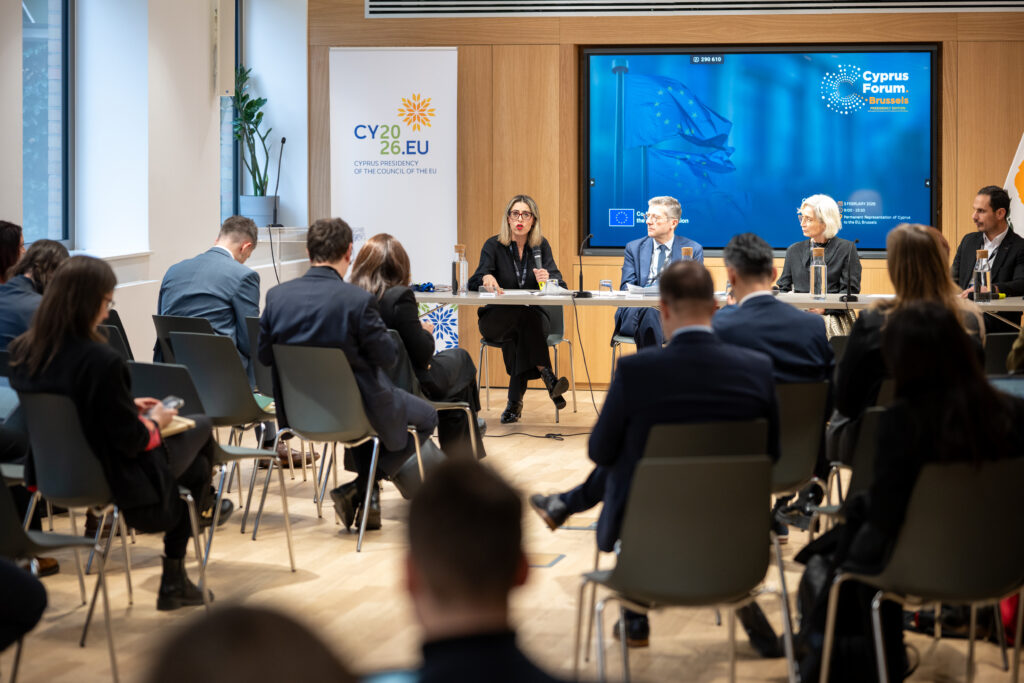
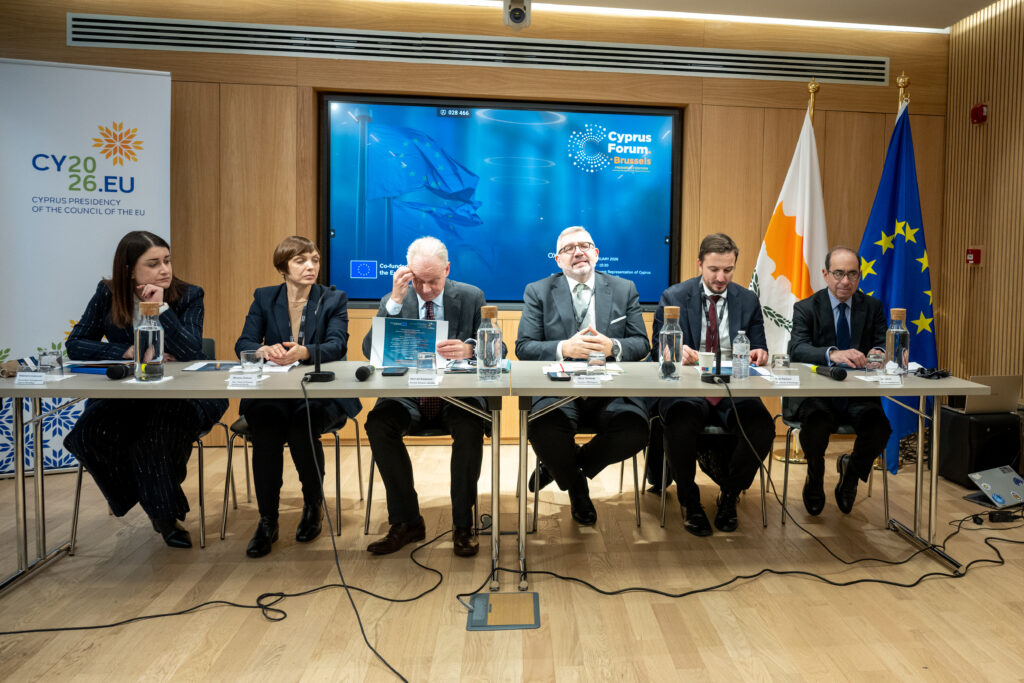
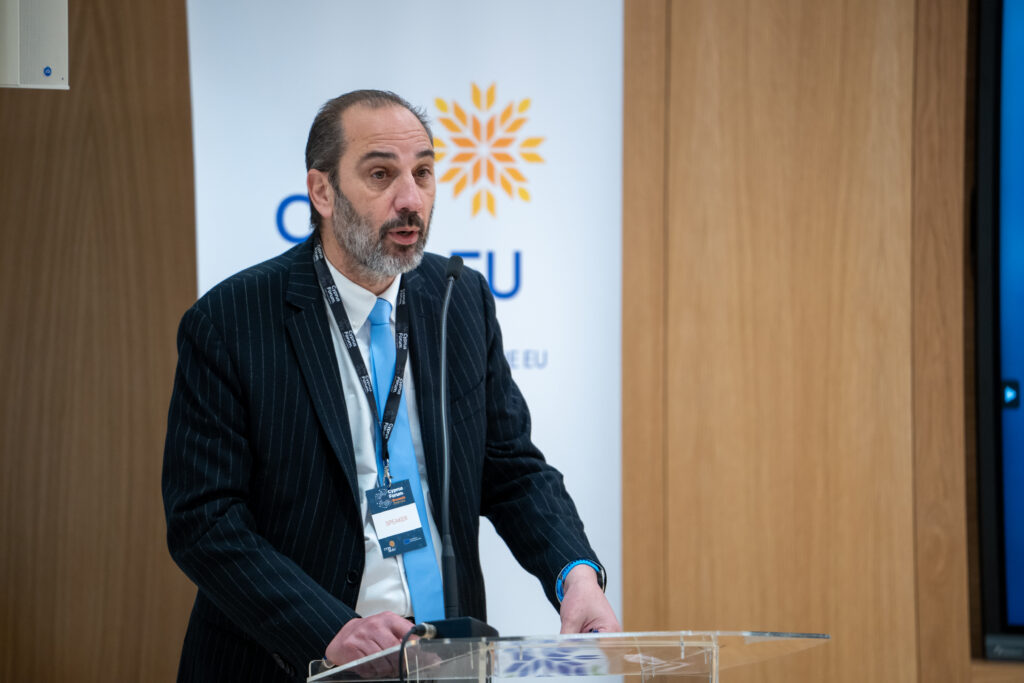
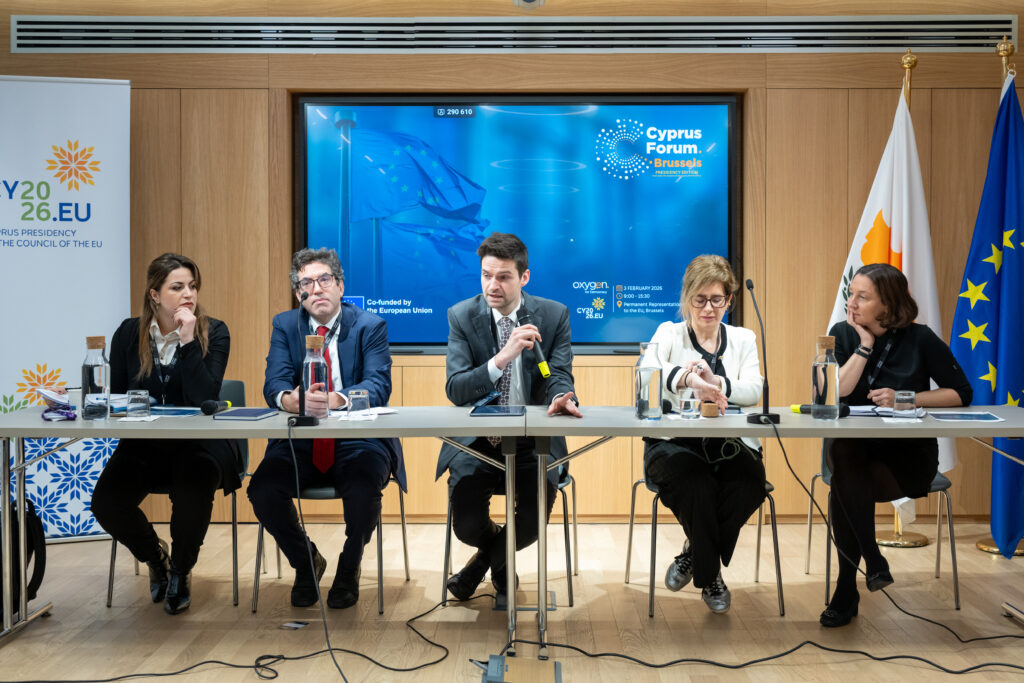
Cyprus Forum Brussels: Presidency Edition brought Europe’s future into focus under the Cyprus EU Council Presidency

The Cyprus Forum Brussels – #CY2026EU Presidency Edition, organised by Oxygen for Democracy and held under the auspices of the Cyprus Presidency of the Council of the European Union, brought together senior EU officials, policymakers, business leaders, and civil society representatives in Brussels for high-level dialogue on Europe’s future under the Cyprus EU Council Presidency. Discussions centred on strengthening Europe’s strategic autonomy, boosting competitiveness, investing in people and skills, advancing inclusive and resilient healthcare systems, and reinforcing the maritime dimension of Europe’s economy and governance.

Contributions from senior officials underscored Cyprus’s ambition to act as an honest broker at a pivotal moment for the Union, while advancing a forward-looking and values-based European agenda.

With panels examining financing Europe’s competitiveness, shaping Europe’s future through education and youth, and the strategic importance of EU enlargement, the forum offered an open and forward-looking platform for addressing the priorities that will define Europe’s resilience, credibility, and global role in the years ahead.

Cyprus Forum Brussels: Presidency Edition brought Europe’s future into focus under the Cyprus EU Council Presidency Read More »

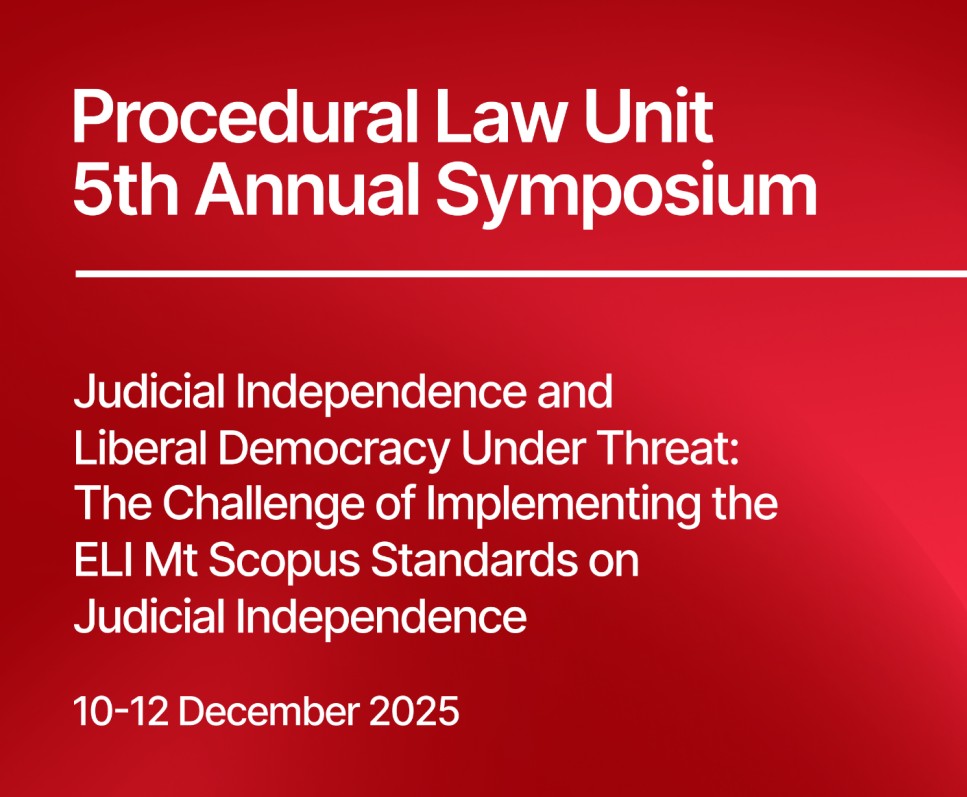
Procedural Law Unit conference warns of intensifying pressures on Judicial Independence and Democracy

The 5th Annual Conference of the Procedural Law Unit at the University of Nicosia brought renewed attention to the growing pressures on judicial independence and democratic institutions, as academics, policymakers and legal experts from Europe, the United States and Cyprus gathered to assess emerging challenges in justice systems worldwide.

Held from 10-12 December in collaboration with the International Association for Judicial Independence and World Peace (JIWP), this year’s symposium focused on the theme: “Judicial Independence and Liberal Democracy Under Threat: The Challenge of Implementing the ELI Mt Scopus Standards.”

Institutional pressures in a shifting democratic landscape

The main conference day, held at the University’s UNESCO Amphitheatre on 11 December, featured interventions that underscored a shared concern: judicial independence is increasingly strained by political, social and technological forces reshaping governance globally.

Speakers highlighted how these pressures are testing the resilience of democratic systems, noting rapid institutional shifts and the heightened visibility of justice in public debate.

The event was addressed by: Michalis Vorkas, President of the Cyprus Bar Association; Despina Kyprianou, Head of the Academy, Law Office of the Republic; Prof. Pascal Pichonnaz, former President, European Law Institute; Nicolaas Bel, Deputy Head of Unit, Justice Policy and Rule of Law, European Commission; Prof. Shimon Shetreet, President of JIWP; Prof. Achilleas Emilianides, Dean of the School of Law, University of Nicosia.

Selection, accountability and public trust

Discussions focused heavily on procedures for the selection, promotion and evaluation of judges, with speakers calling for clear and independent accountability mechanisms to safeguard impartiality. Maintaining public trust through consistent judicial ethics was described as a prerequisite for stable democratic governance.

Participants stressed that Europe’s justice systems face common structural pressures, from political interference to digital-era misinformation, that require stronger institutional safeguards.

Implementing the ELI-Mount Scopus standards

A significant portion of the programme examined the challenges involved in applying the ELI-Mount Scopus European Standards of Judicial Independence, a framework designed to harmonise judicial protections across EU member states and beyond.

Comparative examples from different jurisdictions illustrated the uneven levels of institutional resilience across Europe, as well as the specific obstacles faced by courts in environments of political or social polarisation.

Cross-sector collaboration and judicial training

Academics and practitioners from leading European and American universities emphasised the need for continuous judicial training, cross-sector collaboration, and strengthening of institutional checks and balances, elements they said are indispensable for safeguarding the rule of law.

Alongside the academic programme, participants were offered cultural activities showcasing Cypriot heritage, integrating local context into the wider international gathering.

“Judicial independence is more critical than ever”

Ο Επίκουρος Καθηγητής Νικόλας Κυριακίδης, Διευθυντής της Μονάδας Δικονομικού Δικαίου και Διοργανωτής του συμποσίου, δήλωσε ότι το συωέδριο είχε ως στόχο να συμβάλει σε μια τεκμηριωμένη εθνική συζήτηση για τη μεταρρύθμιση της δικαιοσύνης.

“Judicial independence and institutional soundness are foundational to any democratic system,” he said. “This year’s symposium once again sought to highlight developments shaping the judiciary and to support the ongoing improvement of justice administration in Cyprus.”

The symposium was supported by Scordis & Papapetrou LLC, Lellos P. Demetriades Law Office, Christos Georgiades & Associates LLC, Harris Kyriakides, Oxygen for Democracy, CRoLEV, and FIDE CY.

Procedural Law Unit conference warns of intensifying pressures on Judicial Independence and Democracy Read More »
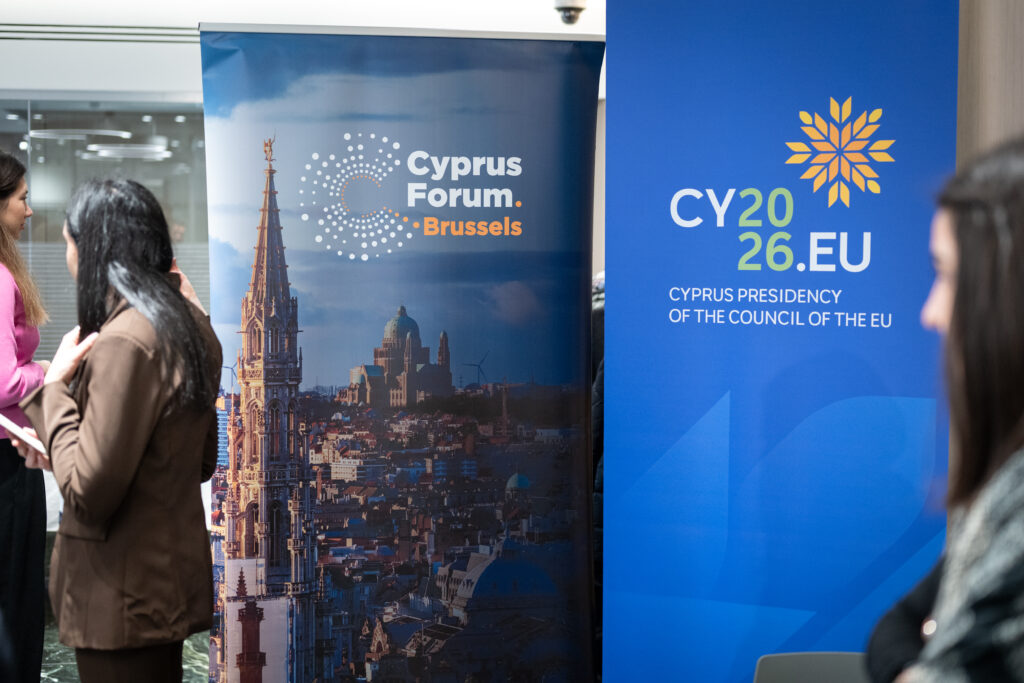
Cyprus Forum 2025: Conversations that Shaped the Future of Democracy, Innovation and Europe’s Prospects

The sixth annual Cyprus Forum 2025 concluded successfully, taking place from 1–3 October in Nicosia. Political leaders, European officials, academics, business representatives and members of civil society came together to discuss the challenges and opportunities shaping the future of Cyprus, Europe and the Eastern Mediterranean.

The Forum opened at the Old Town Hall of Nicosia, with welcoming remarks by Nicolas Kyriakides, Executive President and Founding Member of the Cyprus Forum.

President of the Republic of Cyprus Nikos Christodoulides highlighted the need for reforms that strengthen the rule of law and transparency, while European officials including Costas Kadis and Marta Kos presented the EU’s strategic priorities.

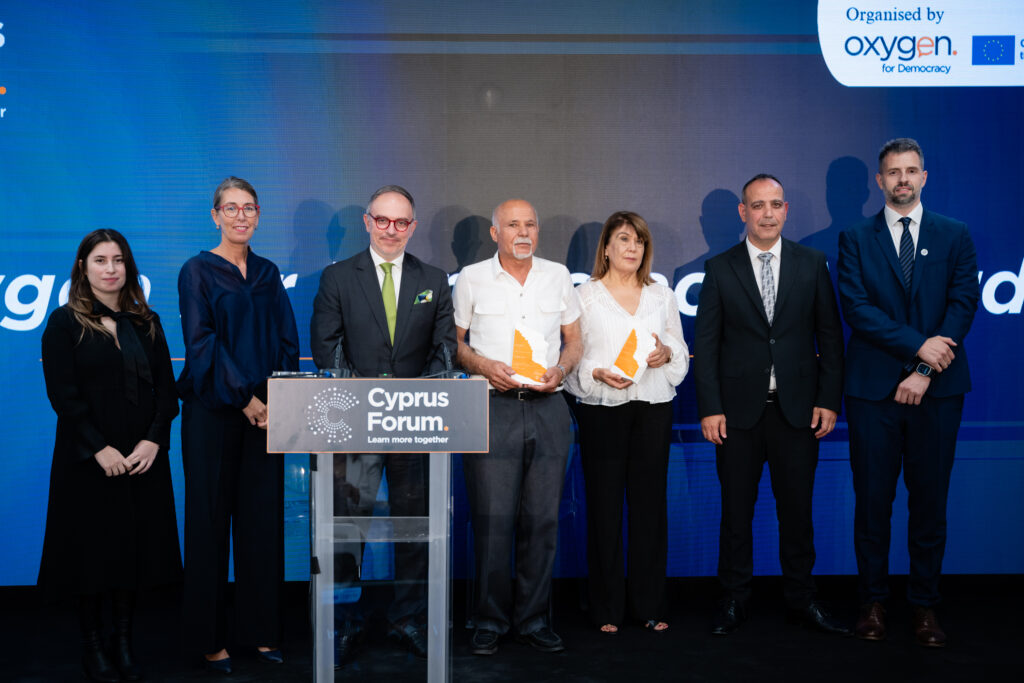
The first day concluded with the Peace & Democracy Award, posthumously presented to Xenophon Kallis and Türkan Aziz for their contribution to democracy and peace.

The second day focused on artificial intelligence, digital transformation, social policy and sustainable development.

Deputy Minister of Research and Digital Policy Nikodimos Damianou and Flavio Arzerello (Meta) discussed the role of technology companies in democratic societies, while Minister of Labour and Social Insurance Yiannis Panayiotou and Minister of Finance Makis Keravnos analysed the prospects for the labour market and fiscal reform.

The third day centred on strengthening democratic institutions, citizen participation, and the strategic importance of the Eastern Mediterranean.

Speakers included Annita Demetriou, President of the House of Representatives, as well as Giorgos Papanastasiou, Minister of Energy, Commerce and Industry, Athena Michaelidou, Minister of Education, Sport and Youth, and European and international officials from the United Kingdom, India and Israel.

Discussions covered education, female leadership, the energy transition, and bicommunal cooperation as a foundation for peaceful development.

The Cyprus Forum 2025 reaffirmed Cyprus’ role as a hub for dialogue, innovation, democracy and sustainable growth, further strengthening its position on the international stage.

Cyprus Forum 2025: Conversations that Shaped the Future of Democracy, Innovation and Europe’s Prospects Read More »
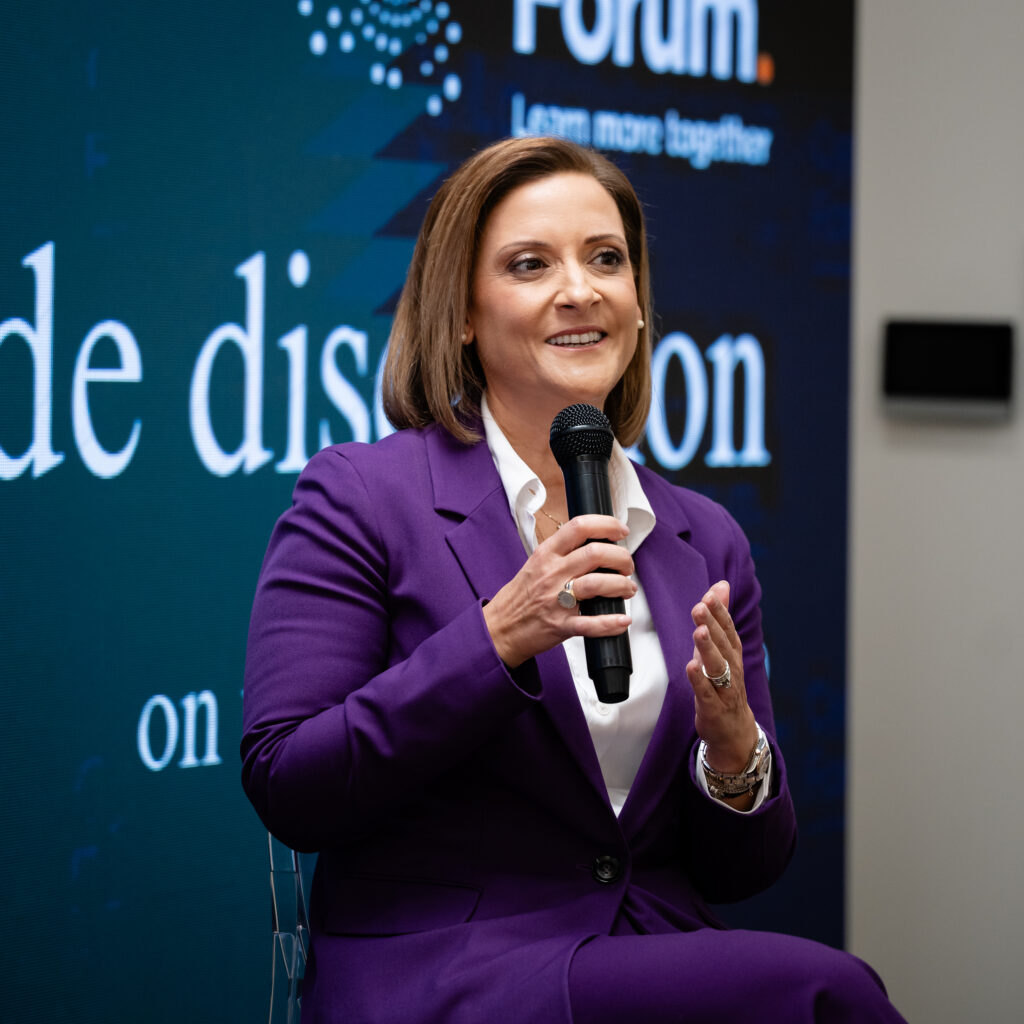
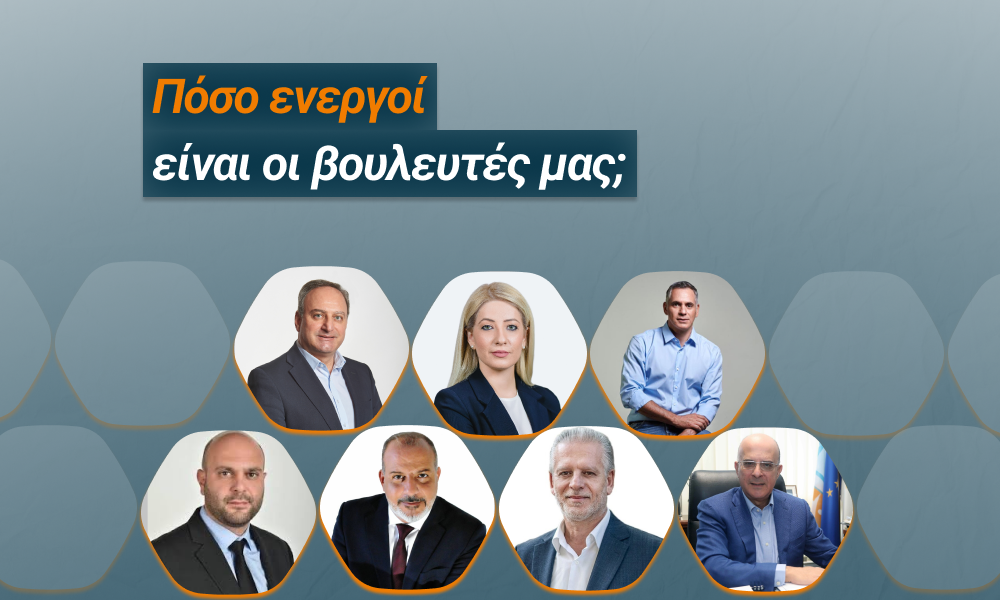
How active are our Members of Parliament?

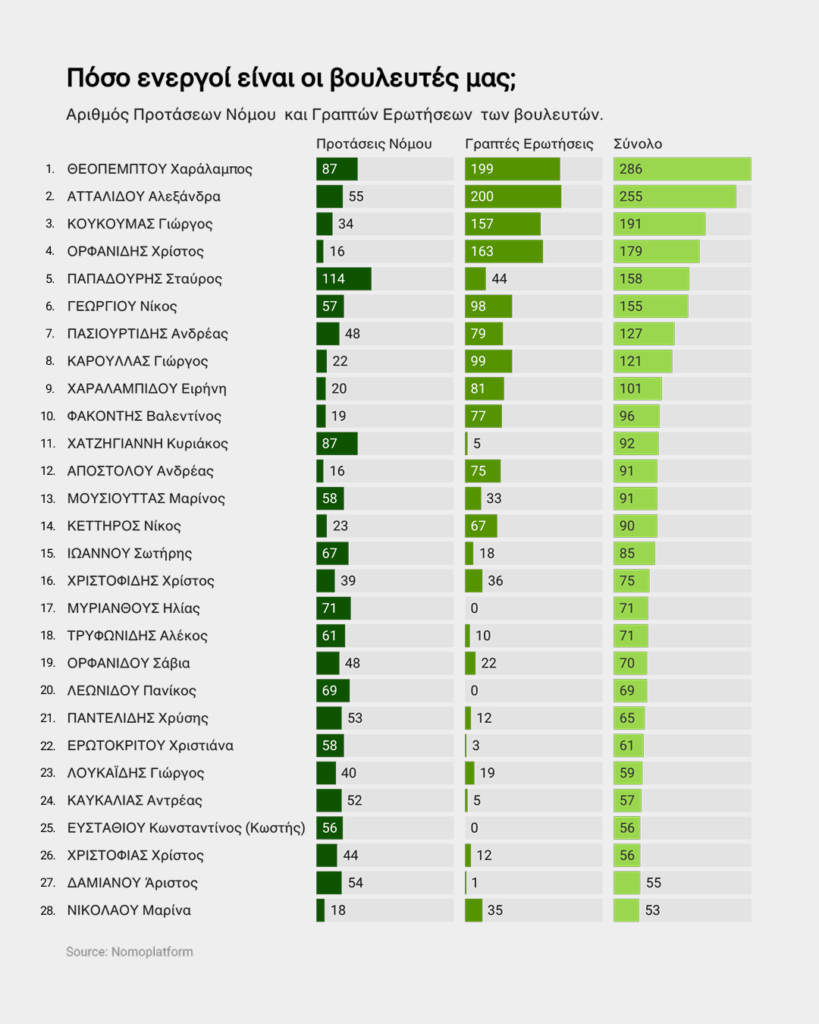
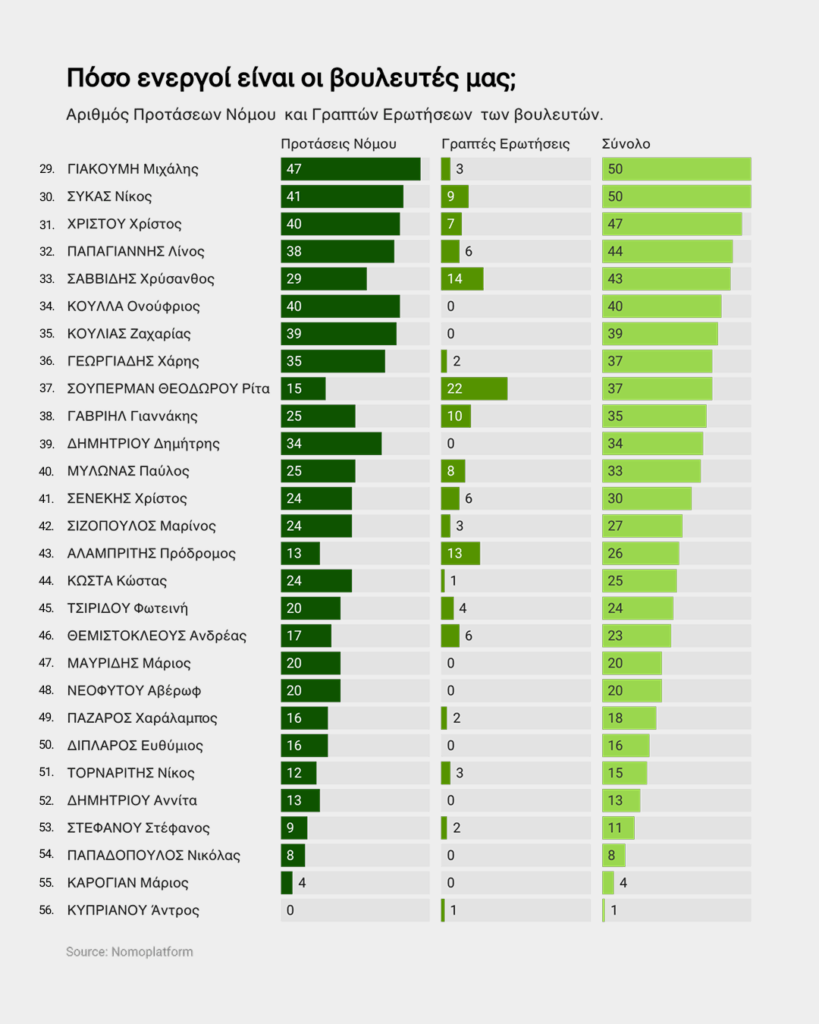
Nomoplatform recently presented statistics on the activity of members of the House of Representatives, focusing on the number of bills and parliamentary questions they have submitted.

These figures relate exclusively to the current parliamentary term and aim to highlight the work of elected representatives with transparency and measurable data.

A common question that arises is: What is more important? To have more legislative proposals or more questions? The truth is that these are different but equally important tools.

The legislative proposals express the will of a member of parliament to promote institutional changes and contribute to improving legislation.

Questions, on the other hand, are a key mechanism of parliamentary control, through which members of parliament seek answers and explanations from the executive branch.

So, value isn't just about numbers, but also about the content, seriousness, and impact of each initiative.

A second point that is often raised is: Are all legislative bills and questions useful? The answer i no.

Some legislative proposals have a decisive social impact, while others are more procedural in nature. Similarly, some questions raise serious issues of transparency or management, while others are limited to formal information.

Therefore, although the figures reflect the mobility of MPs, they do not always reveal the whole picture.

For this reason, Nomoplatform is proceeding with the creation of the Member of Parliament Evaluation Index. This Index will combine quantitative and qualitative data: not only the number of proposals and questions, but also other data that will be evaluated with different weights.

The methodology is based on international practices and corresponding indicators applied in the European Parliament, in order to provide a fairer and more comprehensive picture of each member's actual contribution.

The bottom line is that numbers have value, but they never tell the whole story. Our mission is to provide citizens with a reliable assessment tool that goes beyond statistics and captures real effectiveness and accountability.

Only in this way can citizens have a clear picture of how Parliament works and how their representatives respond to the task entrusted to them.

The following images show the ranking of MPs based on the quantitative data we collected, i.e. the number of bills and written questions they have submitted during the current parliamentary term.

How active are our Members of Parliament? Read More »

Oxygen for Democracy signed a Memorandum of Understanding with the Cyprus Investigative Reporting Network (CIReN)

 New collaboration for Oxygen for Democracy!

We are delighted to announce that we have signed a Memorandum of Understanding (MoU) with the Cyprus Investigative Reporting Network (CIReN).

Through this collaboration, we are strengthening investigative journalism in Cyprus by promoting the exchange of content, knowledge, and best practices, with the aim of accountability and transparency.

A central role will be played by Policypress, a new political journalism platform supported by Oxygen for Democracy, where CIReN content will be hosted.

#OxygenForDemocracy #CIReN #Democracy

Oxygen for Democracy signed a Memorandum of Understanding with the Cyprus Investigative Reporting Network (CIReN) Read More »
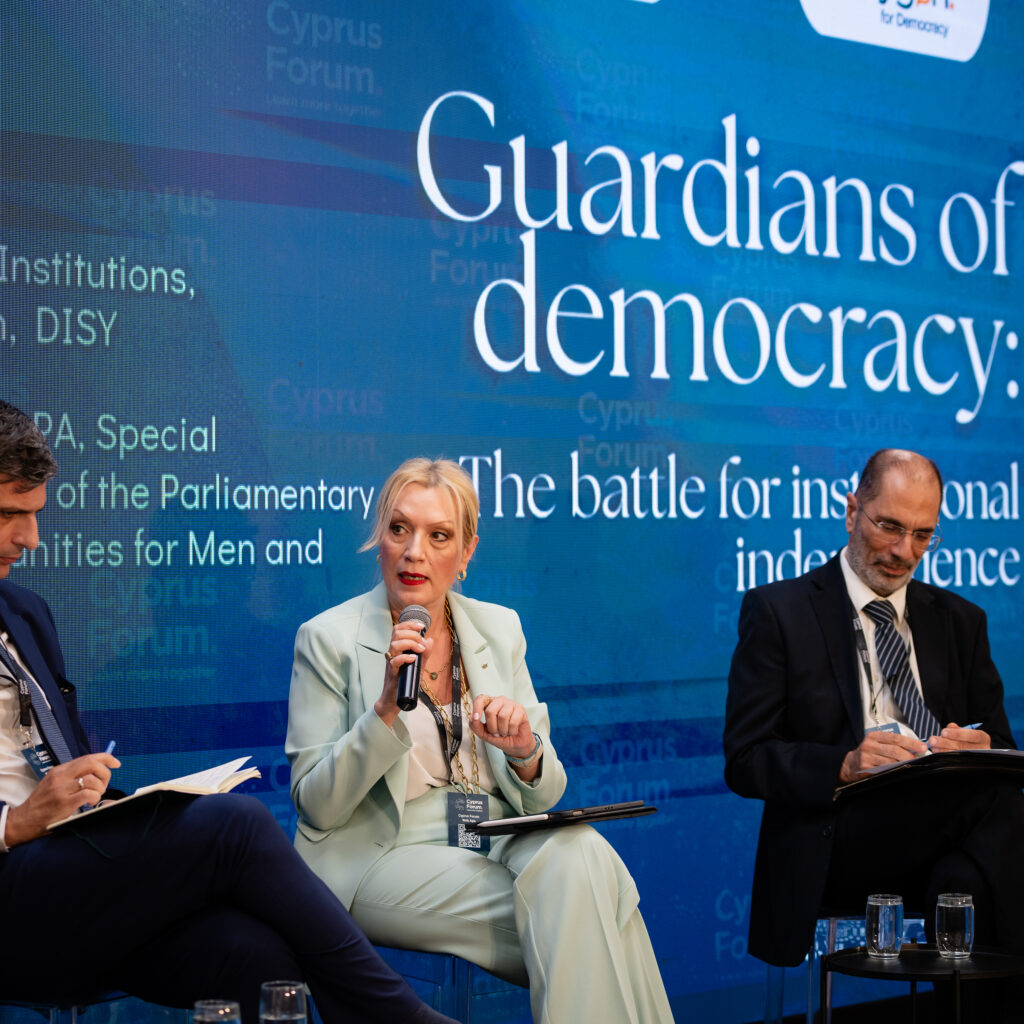
Oxygen for Democracy signed a Memorandum of Understanding with the University of Central Lancashire, Cyprus (UCLan Cyprus).

The collaboration with UCLan Cyprus is focused on the areas of student internships, research and academic expertise, collaboration on events, strengthening each other’s business and pursuing knowledge transfer projects and public outreach. 

We look forward to working with the university to enhance our expertise in the areas of democracy, civil society and rule of law and bring increased opportunities to students of the university. We would like to thank Professor Stéphanie Laulhé Shaelou for her positive response.

Oxygen for Democracy signed a Memorandum of Understanding with the University of Central Lancashire, Cyprus (UCLan Cyprus). Read More »
Oxygen for Democracy signed a Memorandum of Understanding with the European Policy Centre (EPC).

Through its MoU with the EPC, Oxygen for Democracy has become a member of the EPC, allowing for participation in high-level meetings, collaboration on events and exchange of knowledge and experiences in the interest of promoting the organisations’ common values of transparency and democratic governance. 

This cooperation also enables us to strengthen the voice of civil society and contribute more actively to shaping policies for a stronger and more participatory democracy in Europe. We would like to thank Amanda Paul and Johannes Greubel for their assistance in making this happen.

Oxygen for Democracy signed a Memorandum of Understanding with the European Policy Centre (EPC). Read More »